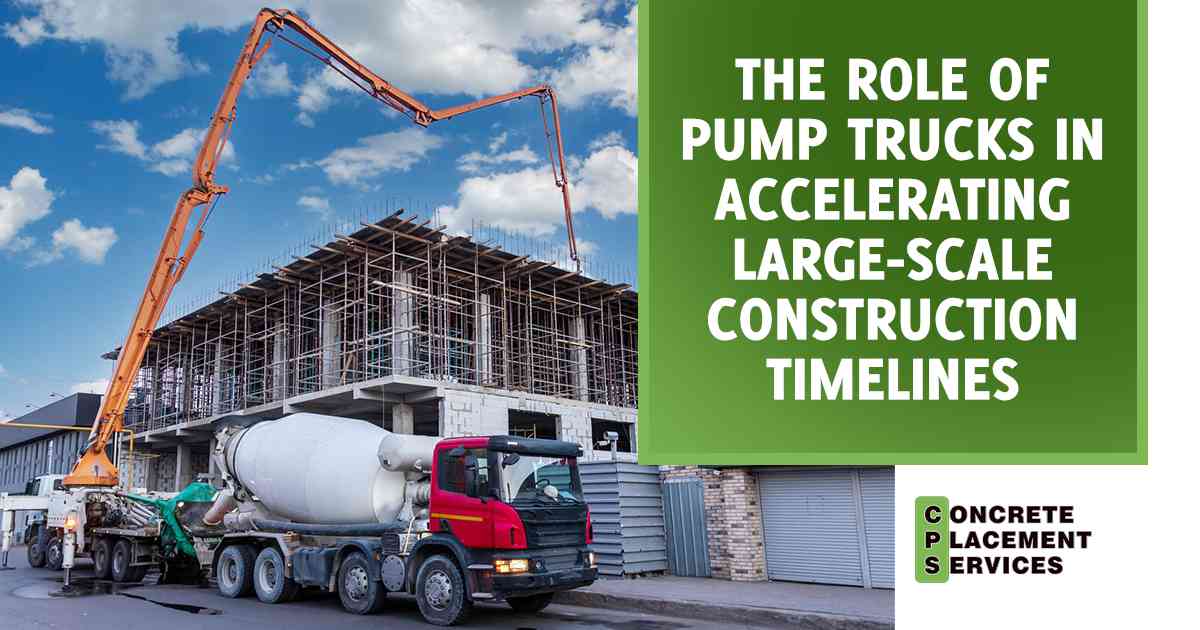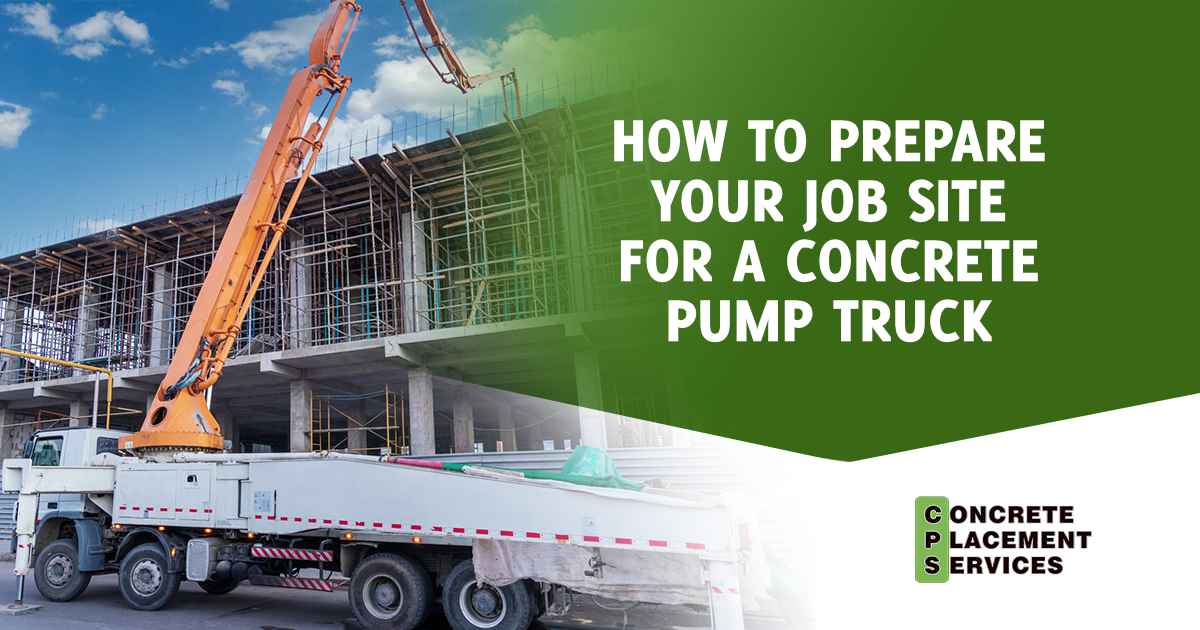
The Southeastern United States is experiencing rapid growth across transportation, industrial, and municipal sectors. As South Carolina, Georgia, and neighboring states expand their infrastructure networks and industrial facilities, reliable commercial concrete placement services have become a critical component of project success. Pump trucks provide contractors with the precision, efficiency, and reach needed to handle large pours in roadways, utilities, industrial foundations, logistics hubs, and public structures, ensuring projects stay on schedule and meet quality standards. The region’s diverse terrain, ranging from coastal zones to urban centers, presents unique challenges that require specialized equipment and expertise. High humidity, variable soil conditions, and frequent rainfall make timely and accurate concrete placement essential to prevent structural issues and ensure long-lasting results. By leveraging advanced pumping technology, contractors can maintain consistent quality across projects of all sizes, supporting the Southeast’s continued economic and industrial growth.
The Growing Demand for Pump Trucks in Southeast Construction
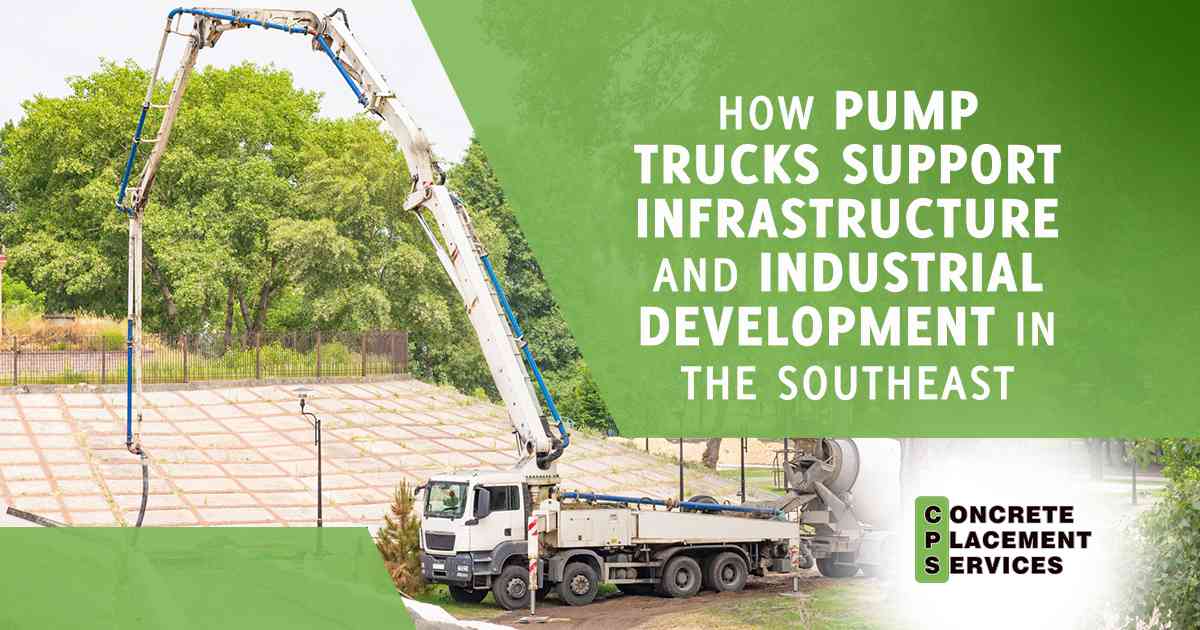
Population increases, economic development, and expanded transportation investments are driving an unprecedented volume of infrastructure projects across the Southeast. Concrete pumping services enable contractors to deliver concrete efficiently to elevated, hard-to-reach, or high-volume areas, reducing manual labor and improving overall project timelines. Municipalities and regional planners increasingly rely on these services when upgrading bridges, highways, utility networks, and public facilities, where consistent placement and speed are critical for meeting safety standards and project deadlines. By ensuring precise and continuous concrete delivery, pump trucks help maintain quality while supporting the region’s growing infrastructure demands.
Why Pumping Services Are Critical for Infrastructure
Concrete pumping services reduce structural inconsistencies and promote safer job sites by minimizing manual handling and site congestion. Continuous concrete flow prevents cold joints and interruptions that could compromise long-term integrity. This precision is particularly vital for DOT projects, industrial foundations, and public structures that must meet strict codes and engineering standards.
Key benefits include:
- Accurate placement in hard-to-reach or restricted areas
- Reduced labor requirements for complex pours
- Improved quality control for critical structural components
Enhancing Efficiency on Public Works Projects
Public works projects in the Southeast face strict timelines due to traffic management, funding schedules, and weather constraints. Pump trucks shorten pour durations, enabling crews to complete more sections in a single day while minimizing site congestion. Their extended reach ensures consistent progress on bridges, highways, utility corridors, and civic structures.
Efficiency advantages include:
- Faster pours for roadways, bridge decks, and utility structures
- Reduced downtime from equipment repositioning
- Predictable scheduling that aligns with inspections and milestones
Supporting Industrial Development Across the Southeast
Industrial growth in South Carolina, Georgia, and neighboring Southeastern states increasingly demands large foundations, heavily reinforced slabs, and complex multi-phase facilities. Pump trucks provide consistent and precise concrete placement across both wide open areas and confined spaces, ensuring structural integrity while keeping construction timelines on track. These services are essential for industrial facilities such as logistics hubs, manufacturing plants, distribution centers, and processing facilities, where accuracy and efficiency reduce downtime and prevent costly delays. By enabling continuous pours and minimizing manual handling, pump trucks help contractors meet engineering specifications and support the region’s rapidly expanding industrial landscape.
High-Volume Placement for Industrial Facilities
Industrial projects often require continuous, uninterrupted pours to support heavy equipment and wide slabs. Pump trucks provide the steady flow necessary to prevent cold joints, structural weaknesses, or delays, making them a reliable asset for large-scale foundations and tilt-up construction.
Precision for Reinforced Foundations
Complex industrial foundations with deep footings, heavy rebar, or multi-level structures demand precise placement. Pump trucks deliver concrete directly into confined spaces without disturbing reinforcement, improving consolidation and reducing voids. This precision ensures long-term structural integrity for both production areas and support structures.
Supporting Fast-Track Timelines
Economic initiatives and supply-chain expansions often impose accelerated schedules on industrial projects. Pump trucks allow contractors to stay on track by speeding pours and reducing manpower needs, supporting coordination with other trades and keeping multi-phase developments on schedule.
Overcoming Southeast Construction Challenges
Construction in the Southeast faces unique challenges, including high humidity, variable soil conditions, coastal influences, and frequent rain, all of which can affect concrete quality and project timelines. Pump trucks help construction teams stay on schedule by enabling fast, continuous pours during narrow weather windows, reducing the risk of delays caused by environmental factors. Their precision placement minimizes exposure to harsh conditions, ensures proper curing, and helps maintain the structural integrity of foundations, slabs, and vertical elements across diverse project sites. By addressing these regional challenges, pump trucks provide a reliable solution for completing infrastructure and industrial projects efficiently and to exacting standards.
Transportation Infrastructure Applications
Transportation projects—including highway widening, bridge replacement, and interchange construction—benefit from the reach and flexibility of pump trucks. Contractors can place concrete efficiently in elevated or difficult-to-access areas, improving safety, reducing traffic disruption, and maintaining quality standards.
Remote or Restricted-Access Sites
Many projects face limited accessibility due to terrain, environmental protections, or urban density. Pump trucks provide the versatility needed to place concrete in challenging conditions, reducing excavation, site disruption, and manual labor requirements while ensuring timely progress.
Advantages for Contractors and Municipal Planners
Pump trucks enhance productivity, improve quality control, and reduce site risks across Southeast construction projects. By minimizing manual handling, crews are safer, site congestion is lower, and project milestones are easier to meet.
Key advantages include:
- Improved worker safety and reduced site congestion
- Greater consistency and quality control for concrete placement
- Reduced labor demands and enhanced project efficiency
- Faster completion of multi-phase and large-scale projects
As the Southeast continues to invest in infrastructure and industrial development, pump trucks have become an indispensable tool for contractors, municipal planners, and project managers. They deliver efficiency, precision, and reliability for roadways, bridges, utilities, industrial facilities, and public structures across South Carolina, Georgia, and neighboring states.
Connect With Concrete Placement Services, LLC for Reliable Pump Truck Support
Regional teams seeking professional concrete pumping services can rely on Concrete Placement Services, LLC for safe, efficient, and dependable support. Their expertise ensures projects of any size are completed on time and meet the highest standards. Contact them at 843-717-2382 or via their Contact Form for more information.