Commercial concrete projects do not all present the same placement challenges, even when they involve similar materials and equipment. A foundation, bridge, and dock can require substantially different approaches based on structural geometry, access conditions, concrete volume, reinforcement, and the location where the material must be placed. Choosing the right concrete placement method by structure helps project teams coordinate equipment, concrete delivery, and placement techniques around the actual demands of the work.
Why Concrete Placement Methods Differ by Structure Type
The structure being constructed plays a major role in determining how concrete can be delivered and placed efficiently. Structural dimensions, reinforcement density, required reach, elevation changes, surrounding structures, and available staging areas can all affect the equipment and techniques needed for a successful pour. These factors make it important to evaluate each project individually rather than treating every commercial concrete structure type as though it has the same placement requirements.
Structure Design Influences Concrete Placement
A structure’s design determines where concrete must go and how much control is required during placement. Large foundation areas may require consistent delivery across a broad footprint, while elevated bridge components can require concrete to travel significant horizontal or vertical distances before reaching the placement point. Dock construction can introduce another set of challenges because portions of the structure may extend over or near water, limiting equipment positioning and access.
Reinforcement can also influence how concrete is placed within a structure. Congested reinforcement and embedded components may leave less room for concrete to move into position, making controlled placement and appropriate sequencing important. The goal is to coordinate the placement process so concrete can reach the required areas while maintaining the project specifications and the planned construction sequence.
Equipment Must Match Project Conditions
Concrete placement equipment should be selected according to the actual conditions of the site and structure. Pump reach, maneuverability, access limitations, placement speed, hose or boom positioning, and concrete delivery coordination can all affect which approach is appropriate. The largest available piece of equipment is not necessarily the best choice if the site cannot accommodate it or if another configuration provides better positioning and control.
Concrete Foundation Placement for Commercial Foundations
Concrete foundation placement requires careful coordination because foundations establish the structural base for many commercial buildings and other projects. Footings, foundation walls, large slabs, reinforcement, and embedded components can each influence how concrete is delivered and distributed throughout the pour. Consistent placement is especially important when the project calls for a coordinated or continuous pour where interruptions could complicate the planned sequence.
Why Foundation Pours Require Controlled Placement
Foundation pours can involve substantial concrete volumes and carefully prepared reinforcement. Concrete must be delivered to the appropriate locations while crews maintain control around reinforcing steel, forms, embedded components, and other construction elements. Site access also matters because the available space for trucks, pumps, hoses, and crews can determine how the concrete reaches the foundation.
A well-planned foundation pour considers both the structure and the surrounding work area. The placement strategy may need to account for where concrete trucks can stage, how equipment can be positioned, and how crews will move through the work area during the pour. Coordinating these factors in advance can help keep concrete delivery aligned with the planned placement sequence.
Equipment and Mix Considerations for Foundation Placement
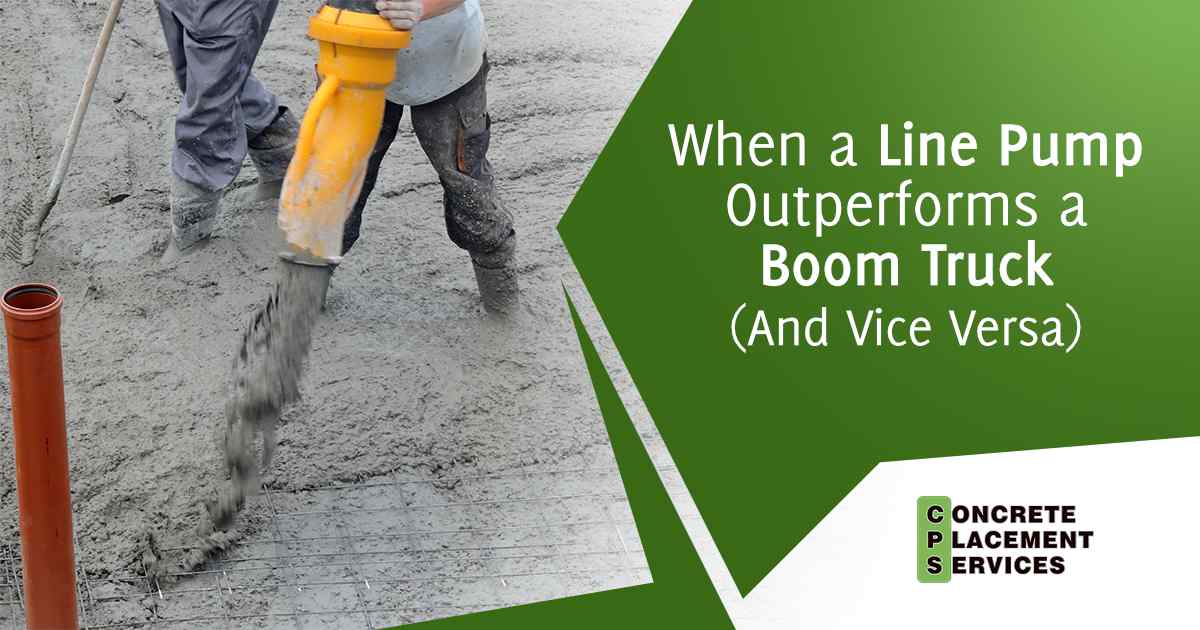
Depending on the application and site conditions, line pumps can provide an appropriate solution when concrete needs to be delivered through a hose to specific foundation areas. Boom pumps can also be advantageous when their reach and positioning capabilities provide a practical way to access portions of a foundation from a suitable setup location. Equipment selection should ultimately reflect the project’s access, reach, volume, and placement requirements.
Concrete mix design is another consideration in foundation placement. The selected concrete must meet the structural specifications while also being compatible with the planned pumping and placement process. Strength, performance characteristics, delivery conditions, and the requirements of the project specifications should all be considered when coordinating the concrete with the placement method.
Bridge Concrete Pumping for Elevated and Difficult-to-Reach Structures
Bridge construction can create placement conditions that differ significantly from those encountered at grade. Elevated work areas, structural components above ground level, long reaches, difficult access, and reinforcement congestion can all affect how concrete reaches the required location. Bridge concrete pumping therefore requires equipment positioning and placement coordination that account for both the structure’s geometry and the limitations of the work zone.
How Bridge Construction Changes Concrete Placement
The elevation of bridge components can make direct concrete access more difficult than it would be on a conventional foundation project. Concrete may need to travel vertically and horizontally before reaching structural elements, while crews work within areas where access and movement can be restricted. The placement process must also account for the sequence in which different structural components are constructed.
Reinforcement density can add another consideration during bridge concrete placement. Concrete needs to be positioned around structural elements according to the project’s specifications, making controlled delivery and coordinated crew movement important parts of the process. The combination of reach, elevation, reinforcement, and work-zone limitations means bridge projects benefit from placement planning that begins before the concrete arrives.
Equipment and Placement Coordination for Bridges
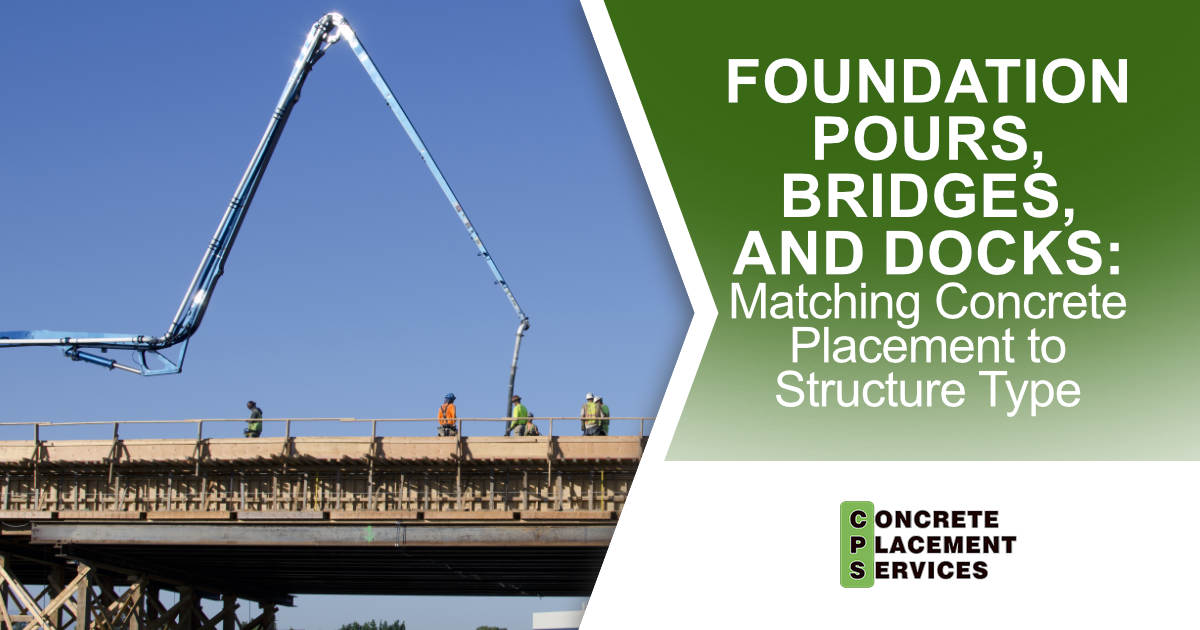
Bridge concrete pumping equipment should be selected according to the required horizontal and vertical reach, available setup locations, placement volume, and work-zone restrictions. Boom positioning can be particularly important when concrete must be delivered to elevated or difficult-to-reach components from a controlled location. The selected configuration should allow crews to work effectively while keeping concrete delivery and placement aligned.
Coordination between the concrete supplier, pump setup, and placement crew is also important. Delivery timing should support the planned sequence so crews can maintain a controlled workflow throughout the pour. When equipment positioning and concrete delivery are considered together, the placement process can be organized around the specific geometry and access requirements of the bridge project.
Dock Concrete Placement and Marine Concrete Pumping
Dock concrete placement introduces challenges that are not typically present on a standard foundation site. Waterfront access, restricted staging areas, structural components extending over or near water, equipment positioning, and environmental exposure can all influence how concrete reaches the intended location. Marine concrete pumping therefore requires careful consideration of both the structure and the surrounding site conditions.
What Makes Dock Concrete Placement Different
Docks and other marine structures may provide limited space for equipment and material staging. Equipment may need to operate from constrained areas while concrete is delivered to portions of the structure that are difficult to reach from conventional access points. These conditions can make pump positioning, hose or boom reach, crew access, and delivery coordination important parts of the placement plan.
The surrounding environment can also influence the construction process. Working near water can affect where equipment can be positioned and how crews approach different portions of the pour. Rather than relying on a standard placement configuration, the project team should evaluate the site’s physical limitations and the structural requirements before determining the appropriate approach.
Access, Equipment, and Concrete Performance
Marine concrete pumping requires equipment that can provide the necessary reach while fitting within the available access and staging conditions. The placement sequence should account for how crews, equipment, and concrete deliveries will interact throughout the work. Careful coordination can help prevent access issues from disrupting the planned placement process.
Concrete performance must also be considered according to the project’s specifications and environmental conditions. The selected mix should satisfy the structural requirements while remaining suitable for the planned placement process. Specific mix and durability requirements should be established from the project specifications rather than assumed based solely on the fact that the structure is located near water.
Comparing Concrete Placement by Commercial Structure Type
Looking at foundations, bridges, and docks together demonstrates why there is no single concrete placement method that works equally well for every commercial project. Foundations commonly center on volume, reinforcement, access, staging, and maintaining consistent placement, while bridges place greater emphasis on elevation, reach, structural geometry, and sequencing. Docks add waterfront access and restricted staging conditions to the placement equation, making positioning and coordination especially important.
The common factor across these commercial concrete structure types is the need to match the placement strategy to the project conditions. Structure design determines where concrete must go, site conditions determine how equipment can reach the placement area, and project specifications determine the requirements for the concrete itself. Considering these factors together creates a more practical framework for selecting equipment and organizing the pour.
Planning Concrete Placement Around Equipment, Mix, and Site Conditions
Successful concrete placement depends on coordinating the material, equipment, structure, and site rather than treating each factor separately. Before a pour begins, project teams can evaluate the structure type, placement location, site access, required reach, concrete specifications, placement sequence, and delivery coordination. This approach helps establish a placement method that reflects the actual conditions of the project.
Equipment selection should account for pump type, reach, maneuverability, setup requirements, and available access. Concrete mix design should satisfy the project’s structural specifications while remaining compatible with the planned placement process and conditions. Placement technique then brings these factors together through controlled sequencing, consistent delivery, crew coordination, and access management.
The planning process can also help identify potential constraints before concrete delivery begins. Understanding where equipment can be positioned, how far concrete must travel, and how crews will move during the pour allows the placement strategy to be organized around the structure instead of adjusted reactively. This structure-specific approach can be particularly important when projects involve elevated work areas, restricted access, large placement volumes, or marine environments.
Why Structure-Specific Concrete Placement Planning Matters
Foundations, bridges, and docks demonstrate how different commercial structures can create very different concrete placement requirements. The appropriate equipment and technique depend on factors such as structure geometry, access, reach, reinforcement, concrete specifications, and the sequence in which the material must be placed. Treating these variables as part of one coordinated placement plan helps project teams approach each pour according to its specific demands.
For a commercial concrete contractor in South Carolina, understanding these differences is an important part of supporting varied project types. Foundation pours, bridge projects, and dock construction each require an approach that reflects the structure and site rather than relying on a one-size-fits-all method. Concrete Placement Services brings experience across different commercial placement conditions, helping projects align equipment, concrete delivery, and placement requirements with the work being performed.
Need Concrete Placement for a Commercial Structure?
Every commercial structure presents its own access, equipment, and placement considerations. Learn more about commercial concrete placement services and how structure-specific planning can support the requirements of a commercial concrete project.