Commercial concrete construction projects often present challenges that extend beyond the concrete mix or pour schedule. Tight staging areas, overhead obstacles, neighboring structures, and restricted site access can all influence whether a project proceeds efficiently or encounters costly delays. Selecting the right boom configuration before work begins helps contractors overcome these challenges while supporting safe and productive concrete placement.
Many construction teams focus on pump capacity or boom length when choosing equipment, yet the folding design of the boom plays an equally important role. A boom's geometry determines how easily it can be positioned, unfolded, and maneuvered around obstacles without requiring frequent repositioning. Understanding the differences between boom configurations allows project teams to make informed equipment decisions that match site conditions.
Among today's most common boom configurations are the Z-fold boom truck and the roll-fold boom pump. While both are designed to place concrete accurately and efficiently, each offers advantages for different commercial applications. Knowing when each configuration performs best helps contractors improve productivity, minimize disruptions, and keep complex projects moving forward.
Why Boom Truck Design Matters on Complex Commercial Job Sites
How Boom Geometry Affects Concrete Placement
Every commercial construction site presents unique physical constraints that influence equipment selection. Building footprints, existing structures, crane operations, utility lines, and limited staging areas all affect how a boom pump can be positioned during a concrete pour. Choosing the appropriate boom pump design helps crews work around these challenges while maintaining efficient placement operations.
Boom geometry refers to the arrangement and movement of each boom section as it unfolds and reaches the placement area. Different folding patterns allow the boom to extend, articulate, and navigate obstacles in distinct ways, making certain configurations better suited for specific job site layouts. Rather than simply reaching farther, an effective boom design allows operators to access difficult areas while minimizing unnecessary equipment movement.
Commercial projects frequently involve confined work zones where equipment must operate safely alongside other trades and heavy machinery. Office developments, hospitals, parking structures, warehouses, and mixed-use facilities often require precise positioning to avoid interfering with ongoing construction activities. Selecting the proper boom configuration improves accessibility while helping crews maintain steady concrete placement throughout the pour.
Why Contractors Should Consider Boom Truck Maneuverability Before the Pour
Equipment selection begins long before concrete arrives on site. Reviewing site plans, access routes, setup areas, and potential obstructions allows contractors to identify the most suitable equipment before mobilization. This planning process reduces the likelihood of unexpected adjustments that can delay production once work begins.
Strong boom truck maneuverability allows operators to position the boom more efficiently without repeatedly relocating the truck during placement. Fewer repositioning moves help maintain continuous concrete flow, reduce labor interruptions, and improve coordination among construction teams. This efficiency becomes especially valuable on projects with limited space or multiple active work zones.
Selecting the right commercial concrete pumping equipment also supports safer operations by minimizing unnecessary equipment movement around personnel and structures. Operators can establish stable pump positioning while maintaining safe clearances from surrounding obstacles. Careful planning ultimately contributes to smoother project execution and improved productivity throughout the construction process.
Why Boom Planning Should Begin Before Equipment Arrives
Successful concrete placement starts during project planning rather than on pour day. Reviewing site logistics early allows contractors to identify restrictions that may influence boom selection, including narrow access points, overhead utilities, neighboring buildings, and crane operations. Addressing these considerations before mobilization reduces the risk of last-minute equipment changes.
Several factors commonly influence boom selection before work begins:
- Available setup and outrigger space
- Building height and structural layout
- Access roads and truck positioning
- Overhead obstructions and utility lines
- Planned concrete pour sequence
Evaluating these conditions helps project teams determine whether a compact or extended boom configuration will provide the safest and most efficient access. Proper planning also minimizes downtime caused by repositioning equipment or modifying work sequences after construction has already begun. As commercial projects become increasingly complex, proactive equipment planning remains an important part of successful concrete placement.
What Is a Z-Fold Boom Truck?
How a Z-Fold Boom Truck Works
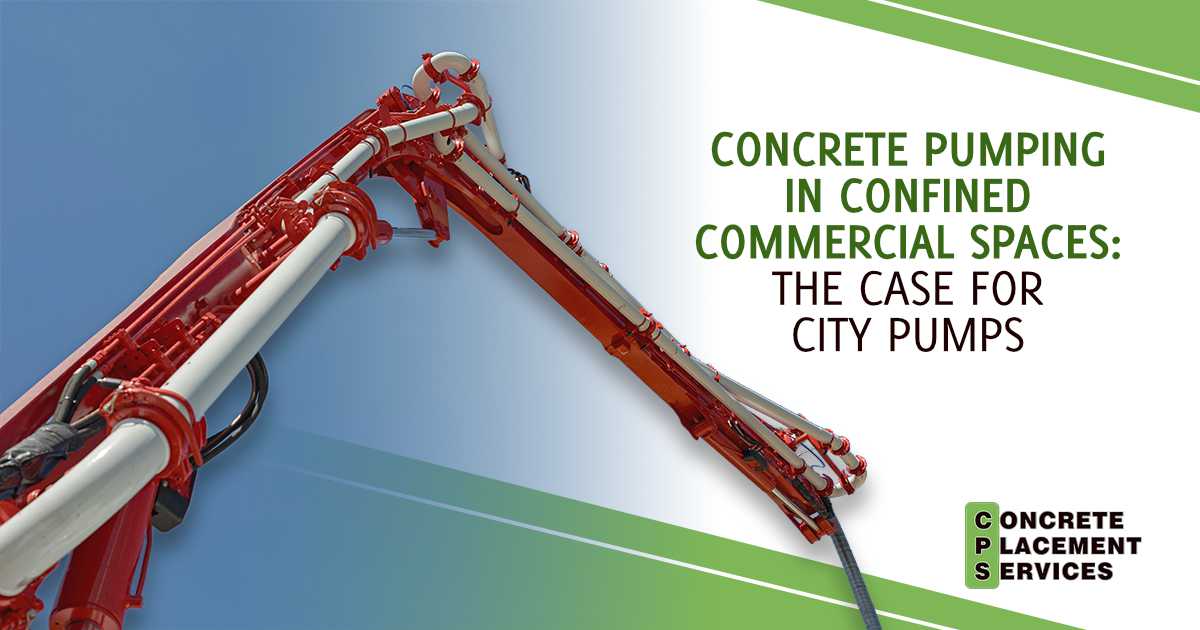
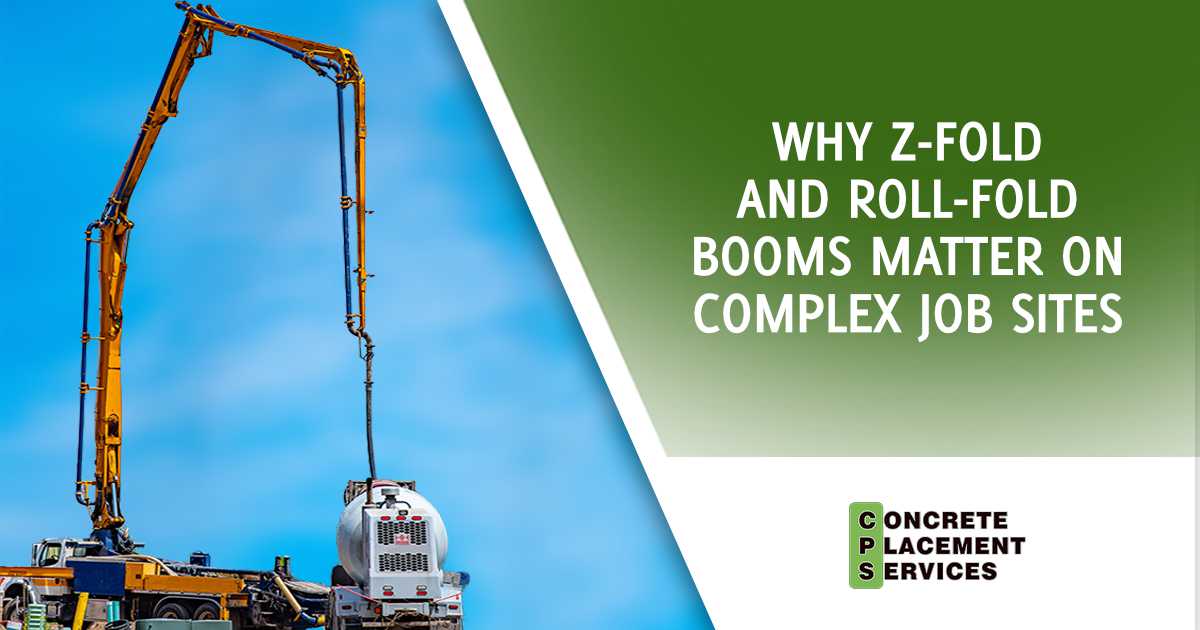
A Z-fold boom truck features boom sections that fold in alternating directions, creating a compact "Z" shape when stored for transport. This folding pattern allows the boom to unfold efficiently while requiring less overhead clearance during deployment than some other configurations. The compact storage design also helps simplify transportation between commercial job sites.
Once positioned, the boom extends through multiple articulated sections that provide flexibility around structural obstacles and confined work areas. Operators can adjust the boom incrementally to reach designated placement points without making excessive truck movements. This adaptable boom pump design makes the equipment well-suited for projects where space is limited or surrounding structures restrict movement.
Modern Z-fold systems combine controlled articulation with stable operation to support accurate concrete placement across a variety of commercial applications. Their compact deployment pattern allows crews to begin pumping sooner in areas where larger unfolding movements may be impractical. As a result, contractors often choose this configuration when accessibility is a primary concern.
When a Z-Fold Boom Truck Is the Better Choice
A Z-fold boom truck performs particularly well on projects where maneuverability is more important than maximum horizontal reach. Urban developments, parking garages, medical campuses, and multi-story commercial buildings frequently require equipment capable of navigating tight staging areas while avoiding nearby structures. The compact unfolding motion allows operators to work effectively within these confined environments.
Projects with overhead restrictions also benefit from the Z-fold configuration. Utility lines, temporary structures, scaffolding, and adjacent buildings can limit the amount of space available for boom deployment. The controlled articulation of a Z-fold boom helps crews position the pipeline while maintaining safe operating clearances.
Additional situations where a Z-fold boom often provides advantages include:
- Downtown commercial developments
- Parking structures
- Schools and institutional buildings
- Mixed-use construction projects
- Sites with limited truck positioning options
Although every project has unique requirements, the compact deployment and reduced swing radius of a Z-fold configuration provide valuable flexibility on many challenging commercial job sites. Contractors who evaluate site conditions before selecting equipment are often better positioned to maintain productivity throughout the concrete placement process. Understanding these strengths also provides a useful foundation for comparing other boom configurations designed for larger or more open construction environments.
What Is a Roll-Fold Boom Pump?
Understanding Roll-Fold Boom Pump Design
A roll-fold boom pump uses a folding pattern in which the boom sections unfold in a smooth, rolling motion that extends outward before reaching the placement area. This configuration allows the boom to achieve significant horizontal and vertical reach while maintaining controlled articulation throughout the pumping process. The design is particularly beneficial on larger commercial projects where extended coverage is more important than compact deployment.
Unlike a Z-fold configuration that prioritizes maneuverability in confined spaces, a roll-fold boom typically excels when operators have sufficient room to position and unfold the equipment. The gradual unfolding sequence allows the boom to cover expansive work areas while minimizing interruptions during placement. This boom pump design supports efficient concrete delivery across wide foundations, elevated structures, and large commercial slabs.
Modern roll-fold systems are engineered to provide stable operation while maintaining precise control over concrete placement. Operators can make incremental adjustments to reach designated pour locations without sacrificing accuracy or consistency. This combination of reach and controlled articulation makes the roll-fold configuration a valuable option for many large-scale commercial construction projects.
When a Roll-Fold Boom Pump Performs Best
A roll-fold boom pump is often selected for projects where open job sites allow equipment to take full advantage of its extended reach. Large industrial developments, warehouse construction, manufacturing facilities, and distribution centers typically provide the space needed for efficient boom deployment. These environments allow operators to maximize coverage while reducing the need to relocate the pump during placement.
Projects involving expansive foundations or continuous slab pours also benefit from the roll-fold configuration. Longer reach enables crews to place concrete across broader sections of the project while maintaining a steady pumping operation. Fewer repositioning moves help improve productivity, reduce downtime, and support consistent concrete placement throughout the pour.
Common applications for roll-fold boom pumps include:
- Industrial facilities
- Distribution centers
- Manufacturing plants
- Large warehouse developments
- Wide commercial slabs
- Extensive foundation systems
Although every project should be evaluated individually, the ability to reach larger placement areas makes the roll-fold configuration an effective solution for many commercial construction environments. When adequate setup space is available, this design can improve operational efficiency while supporting demanding concrete placement schedules.
Z-Fold Boom Truck vs. Roll-Fold Boom Pump: Choosing the Right Boom Design
Comparing Boom Truck Maneuverability
Choosing between a Z-fold boom truck and a roll-fold boom pump depends less on which design is superior and more on which configuration best matches the project's physical conditions. Both boom styles are designed to deliver concrete accurately, but each offers different advantages depending on the available space, structural obstacles, and placement requirements. Understanding these differences helps contractors select equipment that supports safe and efficient project execution.
A Z-fold boom generally performs best where maneuverability is critical. Compact deployment, reduced swing radius, and flexible articulation make it easier to work around existing buildings, overhead obstructions, and confined staging areas. These characteristics improve boom truck maneuverability while helping operators maintain productivity on challenging commercial job sites.
Roll-fold booms, by comparison, are designed to maximize reach across larger work areas. When sufficient setup space is available, their extended coverage can reduce repositioning requirements and improve overall concrete pump job site flexibility by allowing crews to complete more of the pour from a single location. This advantage becomes especially valuable on projects involving broad slabs or expansive structural foundations.
The following comparison illustrates how the two configurations generally differ:
- Z-Fold Boom: Compact deployment, excellent obstacle navigation, ideal for restricted work areas.
- Roll-Fold Boom: Extended reach, efficient coverage of large open sites, fewer repositioning moves.
- Both Designs: Precise concrete placement when matched appropriately to site conditions.
Rather than focusing solely on boom length, contractors should evaluate how the equipment will move throughout the project. Selecting the appropriate configuration improves efficiency, supports safer operations, and helps crews adapt to changing site conditions without unnecessary delays.
Matching Boom Geometry to Project Conditions
No two commercial construction sites are exactly alike. Factors such as building layout, surrounding infrastructure, utility corridors, crane operations, and access limitations all influence which boom configuration will perform most effectively. Evaluating these conditions before mobilization allows project teams to select equipment that aligns with the project's logistical requirements.
Construction sequencing also plays an important role in equipment selection. A project that requires multiple elevated pours, confined staging areas, or phased construction may benefit from the compact articulation of a Z-fold boom, while a large foundation or warehouse slab may be better served by the extended reach of a roll-fold configuration. Matching boom geometry to the planned pour sequence helps maintain efficient workflow throughout the project.
Successful equipment selection is rarely based on a single specification. Experienced project teams consider access routes, setup space, obstacle clearance, placement distances, and overall site logistics before deciding which boom configuration will provide the safest and most productive operation. This planning process helps minimize disruptions while ensuring concrete can be delivered efficiently to every required placement location.
How the Right Boom Configuration Improves Job Site Efficiency
Reducing Delays Through Proper Equipment Selection
Selecting the appropriate boom configuration before construction begins helps eliminate many of the challenges that can slow a commercial concrete pour. Equipment that matches the site's layout reduces unnecessary repositioning, improves access to placement areas, and allows crews to maintain a more consistent workflow. These operational improvements often contribute to better scheduling and fewer interruptions throughout the project.
The right commercial concrete pumping equipment also supports stronger coordination among contractors working on active job sites. When operators can position the boom efficiently, other trades experience fewer disruptions, allowing multiple construction activities to continue safely. This level of coordination becomes increasingly important on large commercial developments where space is shared by several crews and pieces of equipment.
Proper equipment selection offers several operational advantages:
- Reduced truck repositioning during concrete placement
- Improved crew productivity and workflow
- Better access around structural obstacles
- More consistent concrete delivery
- Safer equipment operation in confined work areas
Although equipment alone cannot eliminate every project challenge, choosing the correct boom configuration creates a more efficient working environment. Careful planning before mobilization allows contractors to focus on completing the pour rather than adapting to avoidable equipment limitations.
Supporting Challenging Commercial Construction Projects
Commercial construction projects often require concrete placement in environments where accessibility changes throughout each phase of construction. Schools, hospitals, office buildings, manufacturing plants, and mixed-use developments frequently present evolving site conditions that influence how equipment must be positioned. Selecting the appropriate boom configuration helps crews adapt without sacrificing productivity.
Infrastructure projects also benefit from equipment that can accommodate varying placement requirements. Bridges, retaining walls, utility structures, and large foundation systems may involve multiple pour locations with different access challenges. Choosing the right boom design allows operators to maintain efficient placement while minimizing unnecessary equipment movement.
Every project presents a unique combination of structural layouts, staging limitations, and construction sequencing. Evaluating these factors before work begins allows contractors to align equipment capabilities with project demands, creating a smoother and more predictable concrete placement process.
Why the Right Boom Configuration Improves Project Outcomes
Access to Multiple Boom Configurations
No single boom configuration is ideal for every commercial project. Some sites require compact maneuverability to navigate confined work areas, while others benefit from extended reach that covers larger placement zones with fewer repositioning moves. Having access to multiple boom sizes and folding configurations allows contractors to select equipment based on project requirements rather than equipment availability.
A diverse fleet also provides greater flexibility when site conditions change during construction. Unexpected access restrictions, revised building layouts, or modifications to construction sequencing can influence the most effective equipment choice. Experienced operators can also provide insight into how different boom configurations perform under varying job site conditions, helping project teams make informed equipment decisions.
Selecting equipment should always be a project-specific decision rather than a standard approach. Matching boom geometry to the site's physical characteristics allows contractors to improve safety, reduce delays, and maintain consistent concrete placement throughout every phase of construction.
Selecting the Right Boom for Commercial Concrete Pumping
Commercial projects throughout South Carolina, Georgia, and Florida range from urban developments and medical facilities to distribution centers and industrial construction sites. Each project presents unique logistical challenges that influence how concrete pumping equipment should be deployed. Evaluating site access, available setup space, structural obstacles, and placement requirements before mobilization helps determine which boom configuration will perform most effectively.
Contractors who coordinate equipment selection early in the planning process are often better prepared to avoid costly adjustments during the pour. Reviewing project drawings, construction sequencing, and staging requirements allows project teams to identify the most appropriate boom configuration before equipment arrives on site. This proactive approach supports efficient operations while reducing unnecessary downtime.
For projects requiring specialized boom configurations, working with an experienced commercial concrete pumping provider can simplify equipment planning. Contractors can learn more about available commercial boom truck services and the boom configurations available for a variety of commercial construction applications before finalizing project logistics.
Partner with Concrete Placement Services for the Right Boom Pump Configuration
Successful commercial concrete placement begins with selecting equipment that matches the realities of the job site. Whether a project requires the compact maneuverability of a Z-fold boom or the extended reach of a roll-fold configuration, evaluating site conditions before mobilization helps improve efficiency and reduce unnecessary delays. Concrete Placement Services works with commercial contractors to review project requirements, assess site access, and recommend the boom configuration best suited to each commercial concrete placement project.