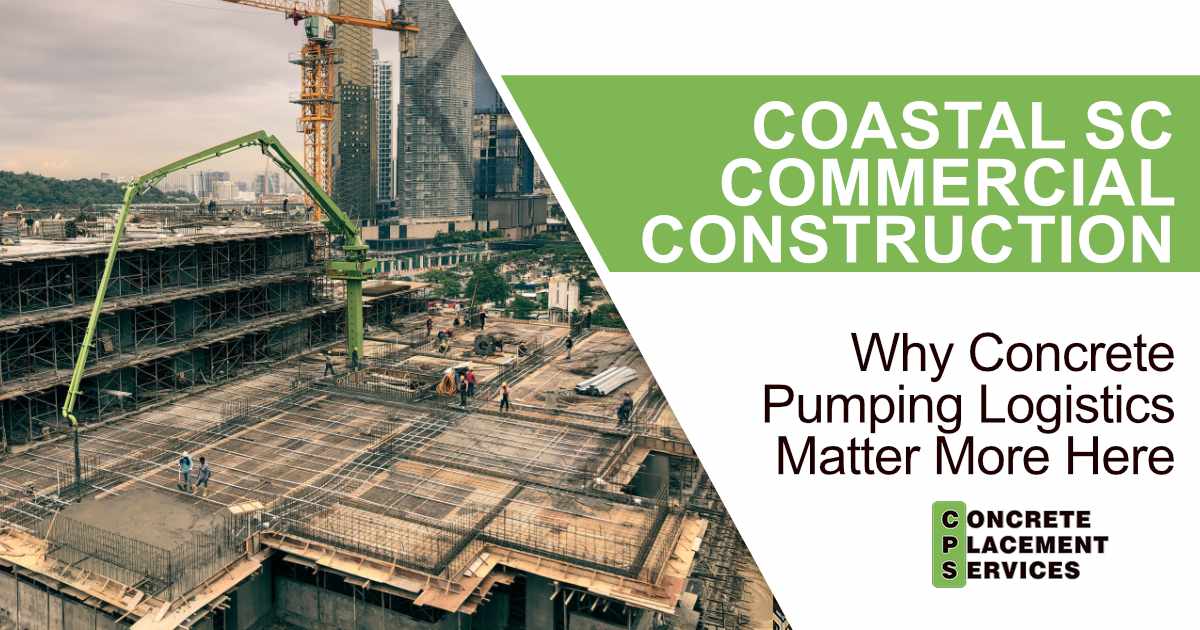
Commercial construction in Coastal South Carolina can involve logistical considerations that are less pronounced on inland projects. Tidal access, coastal weather, salt exposure, marine-adjacent sites, and constrained access can all affect how concrete placement is planned and coordinated. For developers and general contractors working in the Lowcountry, understanding these conditions before a pour can help reduce avoidable delays and improve coordination across the project.
Concrete placement involves more than getting ready-mix concrete to a job site. Pump positioning, truck access, equipment staging, crew coordination, placement sequence, and scheduling all need to work together for a commercial pour to proceed efficiently. When coastal conditions introduce additional variables, concrete pumping logistics become an important part of the overall construction plan. On coastal commercial sites, the success of a pour often depends on how well these moving parts are coordinated before the concrete arrives.
Why Commercial Construction in Coastal South Carolina Requires Different Concrete Logistics
Commercial construction along the South Carolina coast can present a different operating environment than projects located farther inland. Coastal South Carolina concrete projects may involve waterfront development, low-lying sites, marine-adjacent construction, changing access conditions, and weather considerations that require more coordination before placement begins. These factors do not affect every project in the same way, but they can influence how a concrete pour is scheduled and executed.
The scale of commercial construction also increases the importance of coordination. Multiple crews, concrete trucks, pumping equipment, site personnel, and other trades may need to operate within the same work area while remaining aligned with the project’s schedule. A concrete pump that is properly selected and positioned can still encounter problems if delivery trucks cannot access the site, staging space is unavailable, or the placement sequence has not been established.
For South Carolina commercial construction near the coast, concrete pumping should therefore be considered part of the broader site logistics plan. Evaluating access, equipment positioning, delivery timing, and environmental conditions ahead of time allows the project team to identify potential constraints before they interfere with placement. This planning approach can be particularly valuable for out-of-area developers and general contractors who may be less familiar with the characteristics of coastal job sites.
How Tidal Access Affects Concrete Pumping on Coastal Job Sites
Tidal conditions can introduce another variable when commercial construction takes place near waterways or other low-lying coastal areas. Depending on the location and site configuration, changing water levels may influence access to portions of a job site or affect how equipment and delivery vehicles reach the required work area. Projects involving tidal job sites and concrete placement should account for these conditions as part of the overall scheduling process rather than treating them as an afterthought.
Planning Around Tidal Job Site Access
Tidal access considerations can affect more than the timing of a concrete pour. If access routes or work areas change with site conditions, the project team may need to coordinate when pumping equipment arrives, where it can be positioned, and how ready-mix trucks will reach the designated delivery point. Confirming these conditions before placement begins can help prevent equipment from arriving at a location that becomes difficult or impractical to use.
The goal is not to assume that every coastal project will have a specific tidal restriction. Instead, project teams should determine whether tides, water levels, drainage conditions, or the site’s proximity to waterways could affect access on the scheduled pour day. This assessment allows the pumping operation to be integrated with the site’s actual conditions rather than relying on assumptions made during earlier planning stages.
Coordinating Concrete Deliveries and Pump Setup
A concrete pump may be ready for operation, but the pour can still be disrupted if the supporting logistics are not coordinated. Ready-mix trucks need an appropriate route and staging position, pumping equipment needs sufficient setup space, and crews need to know when and where each part of the operation will take place. These details become especially important when a commercial site has limited access or several construction activities occurring simultaneously.
Before a coastal pour, the project team can confirm the intended pump location, truck access route, placement area, and sequence of operations. This type of preparation helps ensure that equipment positioning supports the actual placement requirements rather than creating additional movement or coordination problems. It also allows the pumping contractor and construction team to address potential site constraints before concrete delivery begins.
How Coastal Conditions Can Affect Concrete Placement
Coastal conditions can influence how commercial concrete placement is organized, particularly during periods of warm or changing weather. Humidity, heat, wind, precipitation, and other environmental conditions can affect job-site coordination and the timing of concrete handling activities. Rather than relying on a single assumption about coastal weather, project teams should consider current conditions when planning the placement operation.
Humidity, Heat, and Concrete Placement Timing
Coastal humidity and warm-weather conditions are important considerations when organizing a concrete pour. Environmental conditions can affect how the project team approaches concrete handling, placement timing, crew coordination, and the overall sequence of work. The specific impact will depend on the project, concrete specifications, weather, and other conditions present at the time of placement. Rather than relying on a generalized assumption about how coastal humidity affects concrete, project teams should evaluate the actual conditions and applicable project requirements.
For that reason, concrete pumping in coastal conditions should be evaluated as part of the broader construction schedule. The pumping contractor and project team can coordinate the placement sequence and equipment setup with the expected conditions instead of treating the pump operation as an isolated task. This approach supports a more organized pour while allowing the project team to respond appropriately to conditions that may change.
Weather and Scheduling Risk on Coastal Projects
Weather can also create scheduling considerations for coastal commercial construction. Weather changes may affect when equipment can be positioned, when concrete deliveries can proceed, how crews coordinate their activities, and whether the planned placement window remains practical. Building appropriate communication into the schedule can help the project team respond when conditions change.
The key consideration is coordination rather than attempting to predict every possible weather-related issue. By reviewing the expected conditions and confirming the placement plan before the pour, project teams can identify potential scheduling conflicts earlier. This becomes especially valuable when multiple trades, deliveries, and construction activities depend on the same work area.
Why Salt Exposure Matters for Coastal Foundation Concrete
Coastal environments can expose commercial construction projects to salt-laden air and marine conditions that deserve consideration during project planning. Foundations and other structural concrete elements located near coastal or marine environments may have material and reinforcement requirements established by the project’s engineers and specifications. Those requirements should guide the concrete materials, placement practices, and quality considerations used on the project.
For coastal foundation concrete, pumping logistics are only one part of the overall planning process. The pumping contractor needs to work within the project’s established specifications while also coordinating access, equipment positioning, delivery timing, and placement sequence. Keeping these responsibilities aligned can help ensure that the concrete placement operation supports the broader structural requirements of the project.
The important consideration is that salt exposure does not automatically create one universal placement approach for every Coastal South Carolina project. Site conditions, engineering requirements, concrete specifications, and project design all need to be evaluated individually. Concrete pumping logistics should therefore complement the project’s established technical requirements rather than attempt to replace them.
How Site Access Changes Concrete Placement in Lowcountry Projects
Physical site access can create logistical challenges on commercial projects throughout the Lowcountry. Narrow access routes, limited staging areas, waterfront development, and active construction zones can make it necessary to determine where pumping equipment and ready-mix trucks can operate before the scheduled pour. These considerations can have a direct effect on the efficiency of the placement sequence.
A commercial site may also have several trades working at the same time, which can make equipment positioning more complicated. Pump setup needs to account for available space, access points, the intended placement area, and the movement of other vehicles and crews. Evaluating these factors in advance can reduce the likelihood that an unexpected access issue will interfere with the pour.
Pump Reach and Equipment Positioning
Pump positioning matters because the equipment needs to support the required placement area from a practical setup location. The appropriate pumping configuration depends on the site’s layout, access conditions, required reach, pour location, and other project-specific factors. These considerations are best evaluated before equipment arrives rather than after the placement operation has already begun.
Project teams should therefore review the placement area and available access points as part of pre-pour planning. Confirming where the pump can be positioned and how concrete will move from the delivery trucks through the pumping operation can help establish a more predictable workflow. This is particularly important on commercial sites where space, sequencing, and construction traffic must be coordinated carefully.
Why Local Coastal Experience Can Reduce Concrete Pumping Risk
Experience with Coastal South Carolina construction conditions can provide a practical coordination advantage for commercial projects. A pumping contractor familiar with local site characteristics may be better positioned to identify access questions, equipment-placement considerations, and scheduling issues that should be addressed before a pour. That familiarity does not eliminate project risks, but it can support earlier communication and more deliberate planning.
For out-of-area developers and general contractors, local experience can also simplify coordination with the broader construction team. The pumping contractor may need to communicate with general contractors, project managers, ready-mix suppliers, site crews, and other trades to ensure that the placement plan is understood. Establishing those communication points before the pour can make it easier to address logistical questions before they become operational problems.
What Out-of-Area Developers and GCs Should Discuss Before a Pour
Before scheduling concrete placement on a coastal commercial project, developers and general contractors can review several practical considerations with the pumping contractor to establish a coordinated plan:
- Exact placement location and required reach
- Pump positioning and available staging space
- Site access for pumping equipment and ready-mix trucks
- Concrete delivery timing and pour sequence
- Tidal or other site-access considerations
- Expected weather conditions
- Coordination with crews and other trades
This discussion gives the project team a shared understanding of how the pumping operation fits into the larger construction schedule. It also creates an opportunity to identify access or coordination concerns while there is still time to address them. For projects with unusual site conditions, that planning can be an important part of managing concrete placement risk.
Planning Concrete Pumping for Coastal SC Commercial Construction
Successful concrete placement in Coastal South Carolina depends on more than selecting pumping equipment. Commercial construction coastal SC projects may require the team to consider site access, environmental conditions, equipment positioning, concrete delivery coordination, placement sequence, scheduling, and communication before the pour begins. Addressing these factors early can help prevent logistical constraints from being discovered during active placement.
The same principle applies whether the project is located near a waterfront, in a constrained development area, or on a more accessible commercial site. Coastal conditions should be evaluated based on the actual project rather than assumed to create the same challenges everywhere. A site-specific planning process allows the construction team and pumping contractor to coordinate the operation around the conditions that actually matter.
For developers and GCs working outside their usual market, early communication can be especially valuable. Understanding the access requirements, equipment setup, delivery sequence, and environmental considerations before the scheduled pour gives everyone involved a clearer operational plan. In coastal commercial construction, that preparation can help turn concrete pumping from a potential source of disruption into a coordinated part of the construction schedule.
Plan Concrete Placement With Coastal Site Conditions in Mind
Coastal construction requires careful coordination between the project team, concrete supplier, pumping contractor, and other trades involved in the pour. Developers and general contractors can reduce avoidable logistical issues by discussing access, equipment positioning, delivery timing, and site conditions well before concrete placement begins. When concrete placement support is needed, concrete placement services can be considered early in the project’s planning process.