Commercial concrete projects can vary significantly in scale, access, height, and placement requirements. A foundation pour may require careful access and precision, while a high-rise project can demand substantial vertical and horizontal reach along with detailed coordination between equipment operators and construction crews. For a commercial concrete contractor in South Carolina, having the equipment and experience to adapt to those changing conditions can make a meaningful difference in how efficiently a project progresses.
Concrete Placement Services approaches commercial concrete placement with equipment suited to different project environments. With more than 30 years of experience and a fleet that includes line pumps and boom trucks, the company supports projects ranging from foundations and structural work to large-scale vertical construction. The following sections examine how project conditions influence equipment selection, placement methods, and coordination.
What Makes Commercial Concrete Placement Versatile?
Versatility in commercial concrete placement starts with recognizing that no two construction sites present the same conditions. Factors such as site access, pour location, required reach, concrete volume, building height, structural requirements, and scheduling can influence how concrete must be moved from the truck to its final placement. A contractor working across Southeast commercial construction projects therefore needs more than a single pumping approach.
Ground-level work can sometimes provide straightforward access, but foundations may still require concrete to reach areas that are difficult to approach directly. Other commercial projects may involve obstacles, restricted access points, greater distances, or multiple levels, requiring a different placement strategy. Selecting equipment based on the actual conditions of the project allows concrete placement to remain aligned with the construction plan rather than forcing every project into the same method.
Different Projects Require Different Placement Approaches
A full-service concrete placement approach considers the relationship between the project site, the required reach, and the equipment available to perform the placement. Line pumps can provide flexibility and precision where access is limited, while boom trucks can provide the reach needed for larger or elevated placements. The objective is not simply to use the largest piece of equipment available, but to select an approach that matches the specific demands of the pour.
Foundation Concrete Pumping Starts With Access and Precision
Foundation work is often associated with ground-level construction, but that does not mean every foundation pour is simple. Site conditions can affect where equipment can be positioned, how concrete reaches the foundation area, and how the placement must be coordinated with the construction crew. Foundation concrete pumping can help address those challenges by allowing concrete to be delivered more efficiently into areas where direct placement may be difficult.
Planning is particularly important when foundation work involves limited access or a site configuration that restricts equipment positioning. The placement team must consider the sequence of the pour, the required reach, the location of the concrete delivery vehicles, and the pace of the construction operation. Coordinating those factors helps maintain a consistent placement process while keeping the project schedule in view.
When Line Pumps Make Sense for Foundation Placement
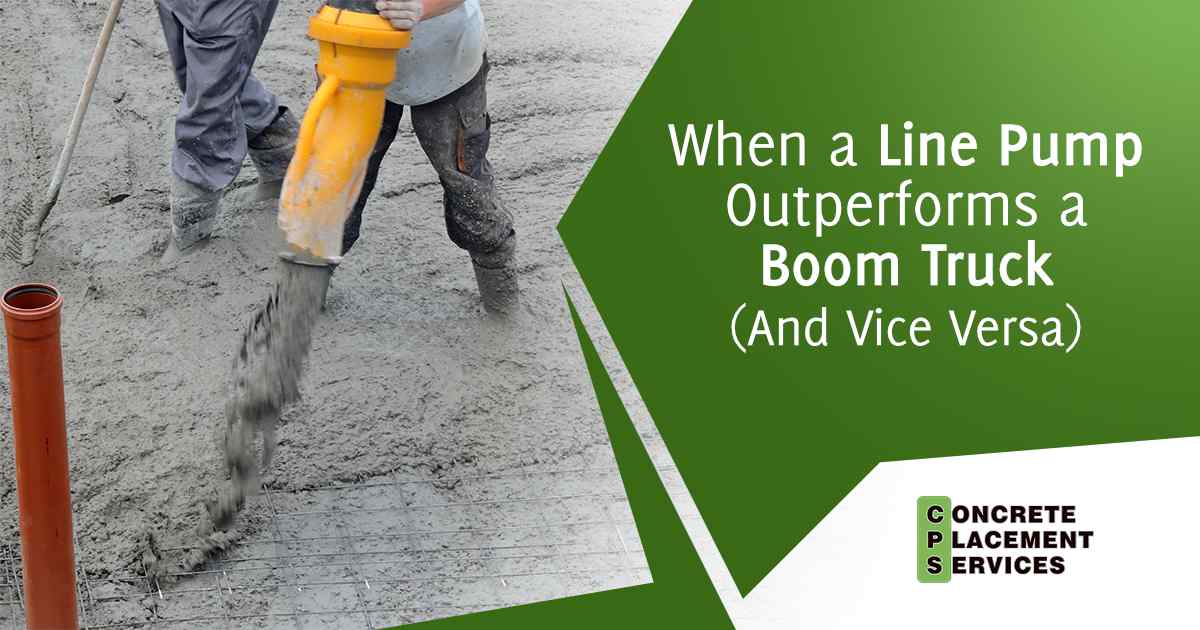
Commercial line pumps can be useful when a project requires flexibility, precision, and access to areas where larger equipment may not be practical. Their configuration can allow concrete to be directed through adaptable hose arrangements, making them suitable for certain foundations and other commercial placements with challenging access. Concrete Placement Services maintains line pump equipment that supports this type of controlled and accessible placement.
The role of a line pump depends not only on the size of the pour, but also on the physical conditions of the site. A substantial placement can still benefit from a line pump when access or positioning makes a boom truck less practical. Matching the pump configuration to the site allows the placement method to support the work rather than become a constraint.
Concrete Pumping for Bridges, Docks, and Large Commercial Projects
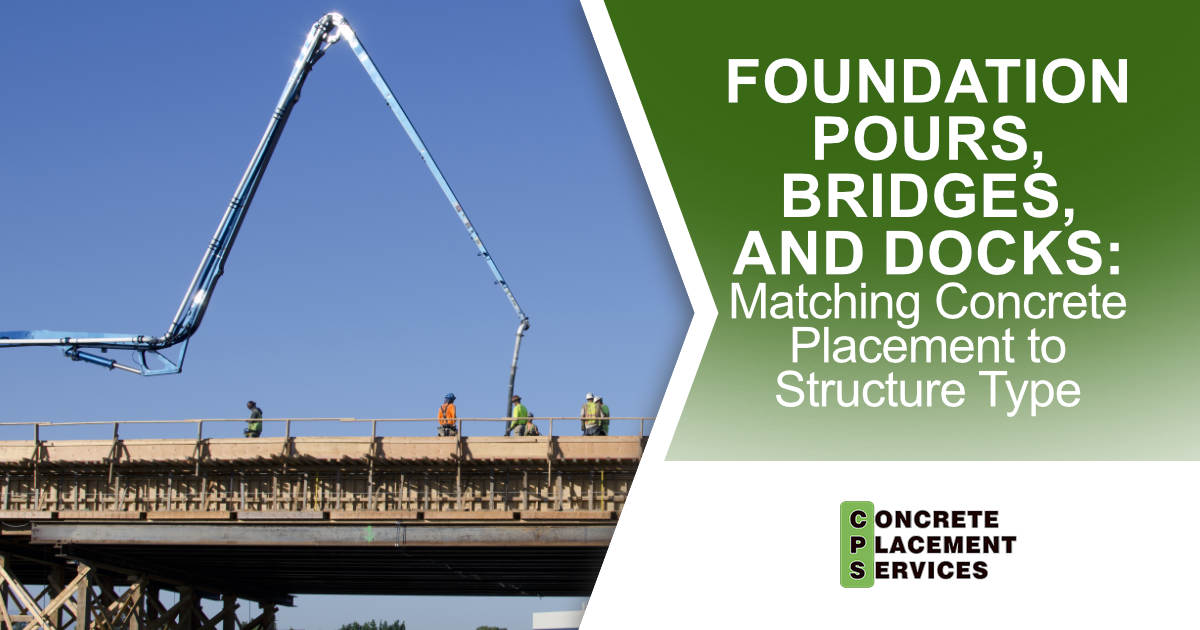
Commercial concrete placement extends well beyond building foundations. Bridges, docks, industrial construction, large commercial structures, and other substantial structural projects can introduce different combinations of distance, access, placement volume, and site configuration. These conditions require the placement method to be considered as part of the broader construction plan. For commercial concrete pumping in South Carolina, those conditions can vary considerably from one project site to another.
For example, a project with a large placement area may require equipment capable of delivering concrete efficiently across the site while maintaining control over where the material is placed. A project with restricted access may call for a more flexible configuration that can navigate around obstacles or reach areas that are not easily accessible from the truck. The right approach depends on the physical characteristics of the project and the coordination required to keep the pour moving.
This is where full-service concrete placement becomes more than having multiple types of equipment available. It involves understanding how equipment capabilities relate to site conditions, project sequencing, and construction crew requirements. A diverse fleet gives contractors more options when determining how to approach different types of commercial work.
High-Rise Concrete Pumping Requires Reach, Coordination, and Control
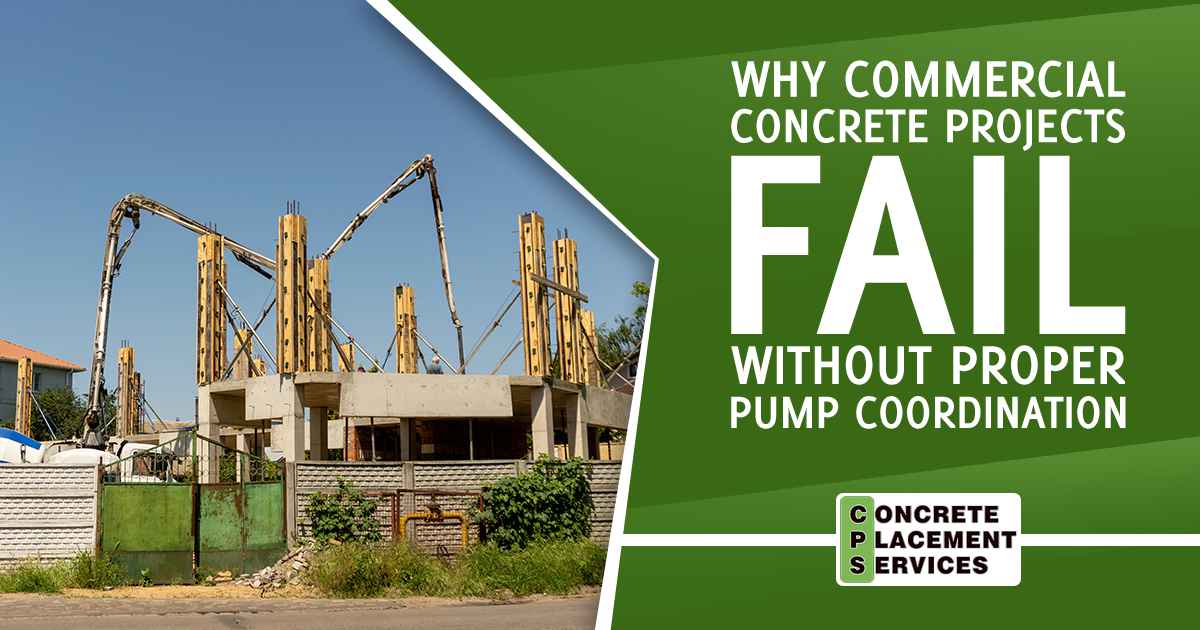
High-rise construction introduces a different set of concrete placement requirements than ground-level foundation work. As a structure rises, concrete may need to travel vertically and horizontally before reaching the intended placement location, while equipment and crews must coordinate around the changing conditions of the construction site. High-rise concrete pumping therefore requires equipment capable of providing the necessary reach along with careful planning and execution.
Vertical reach is only one consideration in elevated construction. Horizontal reach, obstacles around the structure, placement accuracy, pour sequencing, and communication between the pump operator and site personnel can all influence how the work is performed. Maintaining coordination throughout the placement helps ensure that equipment capabilities are used effectively as the project progresses.
Boom Truck Concrete Placement for Height and Reach
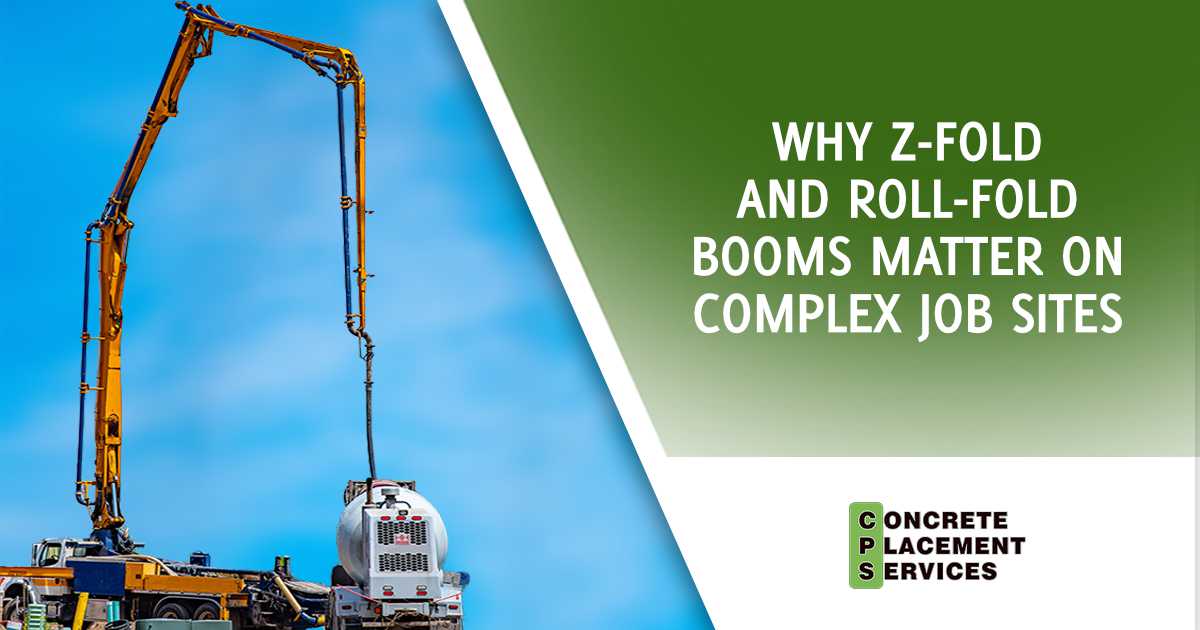
Boom trucks provide a different type of placement capability by allowing concrete to be directed through a boom to locations that may be difficult to reach through conventional methods. Concrete Placement Services maintains boom trucks ranging from 32M through 56RZ, providing different reach capabilities for projects with varying access and elevation requirements. This range demonstrates how equipment diversity can support projects that extend from large foundations to more demanding vertical construction.
The value of a boom truck is not simply its maximum reach. Equipment selection also depends on the configuration of the site, the location of the placement area, surrounding structures, and the reach required to complete the pour efficiently. For high-rise and other large-scale projects, having access to different boom configurations can provide greater flexibility when project conditions change.
How Equipment Diversity Supports Different Commercial Projects
Equipment diversity gives a concrete placement contractor more ways to respond when site conditions vary. A line pump may be appropriate where access is restricted, while a boom truck may provide the reach needed for larger placement areas or elevated construction. In some situations, the appropriate solution may depend on a combination of equipment capabilities and careful coordination.
Equipment is only one part of successful concrete placement. Experienced operators, project planning, communication with the construction team, safety procedures, equipment maintenance, and attention to the placement sequence all contribute to effective execution. Concrete Placement Services emphasizes trained operators, safety and training programs, equipment maintenance, and safety checks as part of its approach to concrete placement.
This combination becomes increasingly important as projects grow in complexity. A foundation, bridge, dock, or high-rise structure may require different equipment, but each project still depends on the same fundamental objective of moving concrete from delivery to placement in a controlled and coordinated manner. Having multiple pumping options allows the placement strategy to change with the project instead of requiring the project to conform to a single piece of equipment.
Adapting Concrete Placement to Different Project Scales
The progression from foundation work to high-rise construction illustrates why commercial concrete placement cannot be approached as a one-size-fits-all operation. Ground-level projects may emphasize access and precision, while larger vertical projects can require greater reach, equipment coordination, and careful positioning around the structure. Bridges, docks, industrial projects, and other commercial construction can introduce their own combination of requirements.
For project teams, the most appropriate placement method ultimately depends on the conditions that need to be addressed. Line pumps can provide flexibility in areas where access is constrained, while boom trucks can provide the reach necessary for larger or elevated placements. A contractor with experience across these environments can evaluate the project requirements and apply the equipment capabilities that best fit the work.
Concrete Placement Services brings this range of capabilities to commercial construction projects throughout South Carolina and the broader Southeast. Its combination of line pump and boom truck equipment, along with more than 30 years of experience, allows the company to support different project scales without treating every placement the same. From foundation concrete pumping to high-rise concrete pumping, the approach remains focused on matching equipment, planning, and coordination to project conditions.
Talk With Concrete Placement Services About the Next Commercial Project
Commercial contractors, project managers, developers, and construction teams can evaluate concrete placement requirements early by considering access, reach, project scale, and the equipment needed for the planned pour. Concrete Placement Services can discuss those project conditions and the pumping capabilities available for different commercial construction applications. The team can help project planners determine which placement approach best fits the demands of the work.