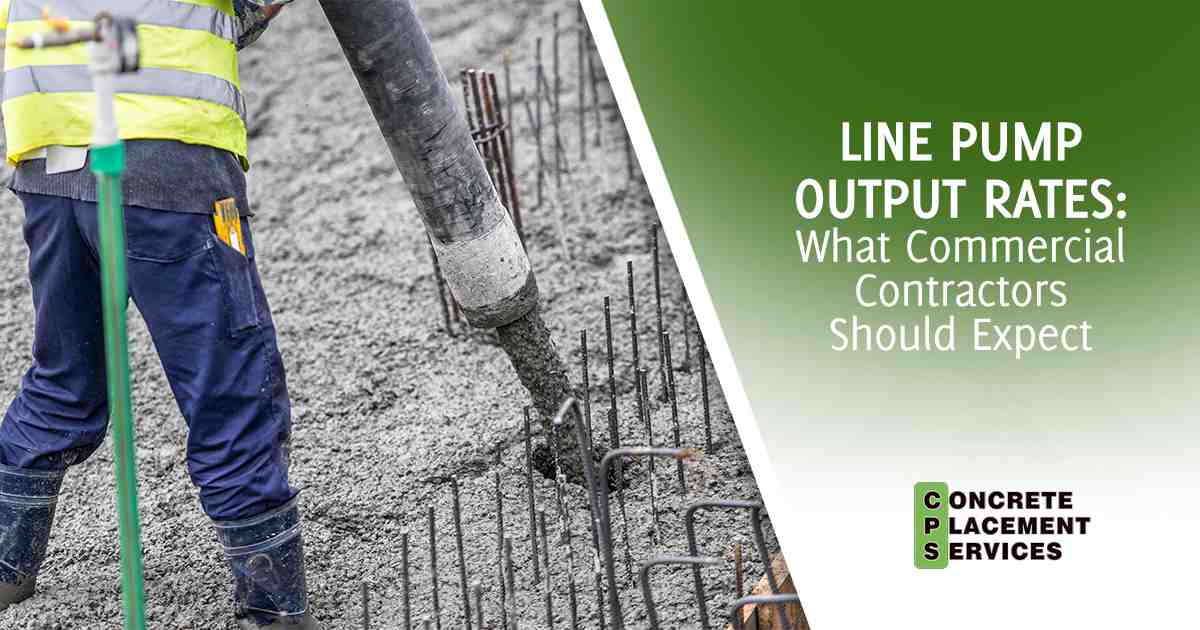
Commercial concrete projects depend on accurate planning, reliable scheduling, and efficient material placement. One of the most important factors in that planning process is understanding the expected line pump output rate. Knowing how much concrete can realistically be placed per hour helps contractors coordinate labor, manage ready-mix deliveries, and keep projects moving efficiently.
While pump manufacturers often publish maximum production ratings, actual field performance can vary significantly from one project to another. Factors such as concrete mix design, pumping distance, elevation changes, and jobsite conditions all influence production rates. Understanding these variables allows contractors to set realistic expectations and avoid costly delays during concrete placement.
What Line Pump Output Rates Mean for Commercial Projects
A line pump output rate refers to the amount of concrete a pump can move and place within a specific period, typically measured per hour. This metric serves as an important benchmark when planning commercial concrete pours. Contractors often use projected output rates to estimate labor requirements, schedule deliveries, and determine project timelines.
Theoretical output rates are typically based on ideal operating conditions and uninterrupted pumping. Actual production rates in the field are often lower because of site-specific factors and unavoidable interruptions. Understanding the difference between theoretical capacity and real-world performance is essential for accurate project planning.
Concrete pump volume per hour affects nearly every aspect of a commercial pour. When output rates are overestimated, crews may experience delays, equipment downtime, and scheduling conflicts. More realistic projections help create smoother operations and more predictable project outcomes.
Reliable output estimates also improve coordination between pumping crews and ready-mix suppliers. Proper timing helps reduce waiting periods between truck arrivals and concrete placement activities. This level of coordination contributes to greater efficiency throughout the entire project.
Factors That Affect Concrete Pump Flow Rate and Production Capacity
Several variables influence the concrete pump flow rate on commercial projects. While equipment selection is important, many external conditions also affect performance. Understanding these factors helps contractors develop more accurate production expectations before work begins.
Key factors that affect pumping performance include:
- Concrete Mix Design: Mixes with appropriate slump, aggregate size, and admixture content generally move through pumping systems more easily. Poorly designed mixes can create resistance, increase pressure requirements, and slow production rates.
- Aggregate Size: Larger aggregate particles may increase friction within hoses and pipelines, particularly on longer pumping runs. Contractors often work closely with suppliers to ensure the mix is suitable for the planned pumping operation.
- Hose Length and Pumping Distance: As concrete travels farther through the system, friction increases, and pumping efficiency may decrease. Longer horizontal runs typically require additional pressure to maintain consistent flow rates.
- Elevation Changes: Vertical pumping applications require the pump to overcome gravity while maintaining consistent delivery. Greater elevation changes often reduce achievable production rates compared to flat, horizontal placements.
- Jobsite Accessibility: Congested sites, limited staging areas, and difficult access routes may slow down material movement and placement activities. These conditions often impact productivity even when the pump itself is performing as expected.
- Weather Conditions: High temperatures may accelerate concrete setting times, while heavy rain can create site challenges that affect crew productivity. Planning for weather-related variables helps contractors avoid unexpected disruptions.
- Crew Readiness: Efficient placement depends on proper communication between pump operators, finishers, laborers, and delivery personnel. Well-coordinated teams often achieve higher production rates than crews working without a clear placement strategy.
Commercial Concrete Pumping Capacity: What Contractors Should Realistically Expect
Commercial concrete pumping capacity is often discussed using maximum manufacturer ratings. While these figures provide a useful reference point, they do not necessarily reflect actual field performance. Real-world production depends on a combination of equipment capabilities and project-specific conditions.
Setup and preparation activities can influence overall productivity. Before pumping begins, crews must position equipment, establish pumping lines, and verify site readiness. These tasks are essential for safe operations, but reduce the amount of time available for active concrete placement.
Pour interruptions are another common factor affecting production rates. Delays related to concrete deliveries, site adjustments, or finishing activities can temporarily halt pumping operations. Even short interruptions can impact average hourly output across an entire project.
Concrete delivery timing plays a significant role in maintaining efficient pumping operations. If ready-mix trucks arrive too slowly, crews may experience downtime while waiting for additional material. Consistent delivery schedules help support steady production and improved placement efficiency.
Placement complexity can also affect output expectations. Simple slab pours often allow for faster production rates than projects involving multiple placement zones or structural elements. The more complex the placement process becomes, the more likely production rates will vary throughout the pour.
Contractors benefit from viewing pumping capacity as a planning tool rather than a fixed guarantee. Production rates should always be evaluated within the context of the specific project requirements. This approach helps establish realistic expectations and supports more accurate scheduling decisions.
SP 305 vs SP 500: Comparing Line Pump Performance for Commercial Projects
When evaluating line pump commercial projects, contractors often compare different pump models to determine which equipment best fits their needs. Two commonly used options include the SP 305 and SP 500. Each pump offers unique advantages depending on project size, pumping distance, and production requirements.
- The SP 305 is often selected for projects that require reliable pumping performance on smaller to mid-sized commercial placements. It can be an effective solution for foundations, sidewalks, parking areas, and other applications with moderate production demands. Its versatility makes it suitable for a wide range of commercial concrete placement projects.
- The SP 500 is generally better suited for larger pours that require greater pumping capacity and extended pumping distances. Contractors frequently use this type of equipment for large slabs, industrial facilities, and substantial commercial placements. Increased capacity can help support higher production goals on demanding projects.
| Consideration | SP 305 | SP 500 |
| Typical Project Size | Small to Mid-Sized Commercial Projects | Large Commercial Projects |
| Volume Requirements | Moderate | High |
| Pumping Distance | Moderate Runs | Extended Runs |
| Common Applications | Foundations, Sidewalks, Parking Areas | Large Slabs, Industrial Projects |
| Production Goals | Standard Commercial Placement | Higher Volume Placement |
Choosing the right pump requires more than simply comparing output capabilities. Contractors must also consider pumping distance, site conditions, mix characteristics, and scheduling requirements. Selecting equipment that aligns with project demands can improve overall efficiency and reduce the risk of production bottlenecks.
It is important to remember that manufacturer ratings represent ideal conditions. Actual field performance depends on many operational variables that affect pumping efficiency. Contractors should evaluate equipment options based on realistic project conditions rather than theoretical maximum output alone.
How Higher Concrete Placement Efficiency Improves Commercial Project Outcomes
Improving concrete placement efficiency can have a meaningful impact on commercial construction projects. Efficient pumping operations help reduce downtime, improve labor utilization, and support more predictable scheduling. These benefits contribute to better project performance from start to finish.
Reducing bottlenecks during concrete placement helps crews maintain consistent productivity throughout the pour. When pumping operations proceed smoothly, finishing crews can work more efficiently and avoid unnecessary delays. This coordination supports better overall project execution.
Improved labor productivity is another advantage of efficient pumping operations. Crews spend less time waiting for material and more time completing placement activities. Higher productivity can help contractors maximize resources and improve project profitability.
Reliable production rates also support more accurate scheduling. Contractors can better coordinate deliveries, labor allocation, and subsequent construction activities when pumping performance is predictable. This level of planning contributes to smoother project workflows and fewer disruptions.
Ready-mix coordination becomes easier when expected output rates are understood in advance. Delivery schedules can be aligned with pumping capacity to minimize waiting periods and avoid excessive material buildup on site. Better coordination supports both efficiency and quality control during placement.
Planning Line Pump Commercial Projects for Consistent Production Rates
Successful pumping operations begin long before concrete arrives at the jobsite. Proper planning helps contractors establish realistic production goals and identify potential challenges before placement activities begin. Early preparation often leads to more efficient and predictable results.
Before scheduling a line pump, contractors should evaluate the following factors:
- Total Pour Volume: Understanding the amount of concrete involved helps determine the appropriate equipment and scheduling strategy. This information also supports more accurate production planning.
- Pumping Distance: Longer pumping runs may require adjustments to equipment selection and placement strategies. Identifying distance requirements early helps avoid unexpected complications during the pour.
- Elevation Changes: Vertical pumping requirements can influence equipment performance and overall production expectations. Evaluating elevation demands helps establish more realistic output projections.
- Concrete Mix Specifications: Mix design plays a critical role in pumping performance. Communicating mix requirements and pumping expectations with suppliers helps ensure the selected concrete supports efficient placement.
- Site Access and Staging Areas: Limited access may affect equipment positioning and delivery logistics. Reviewing site conditions in advance allows contractors to develop solutions that minimize disruptions during placement.
- Placement Sequencing: Establishing a clear placement plan helps crews maintain steady progress throughout the pour. Organized sequencing also improves coordination between pumping crews, finishers, and ready-mix deliveries.
Carefully reviewing these factors before work begins helps contractors improve concrete placement efficiency, reduce delays, and maintain more consistent production rates throughout commercial pumping projects.
Why Equipment Selection and Operator Experience Affect Output Rates
Equipment selection and operator experience can significantly influence production outcomes on commercial projects. Experienced operators understand how to adapt to changing site conditions while maintaining efficient pumping performance. Their expertise helps contractors achieve more consistent results throughout the placement process.
Selecting the right equipment for the project is equally important. Different pumping applications require different capabilities, and matching equipment to project requirements supports more reliable production rates. Careful planning helps ensure pumping resources align with operational demands.
Contractors evaluating upcoming projects can benefit from understanding available pumping options and equipment capabilities. Learning more about available commercial line pumping services can help support informed planning decisions. Access to knowledgeable guidance often improves project coordination and production expectations.
Schedule a Commercial Concrete Pumping Consultation
Commercial concrete placement projects benefit from careful planning, realistic production expectations, and the proper equipment selection. Understanding the factors that influence line pump output rates helps contractors improve scheduling accuracy and jobsite efficiency. Contractors evaluating upcoming projects can learn more about available line pump solutions and capabilities by visiting the Line Pumps page.